27°07'S · 109°21'W · Easter Island
Eyes · To · The · Edge
The most remote islands on Earth. Where silence tells more than any word.
Milan, 1987. Years in fashion marketing, a solid career that felt increasingly far from what actually mattered.
In 2022 he left it all. From Ushuaia he crossed the South Atlantic on a century-old Dutch sailing ship, through Antarctica, South Georgia, and Tristan da Cunha. the most isolated inhabited island on Earth.
It was out there, far from everything, that he found his direction. The further away, the clearer it became. Remoteness is not just the name of the project. It is the answer.
In 2024, the South Pacific. In 2025, the Antarctic Peninsula. Summer 2026: the Arctic, aboard a NATO vessel with the Italian Navy.
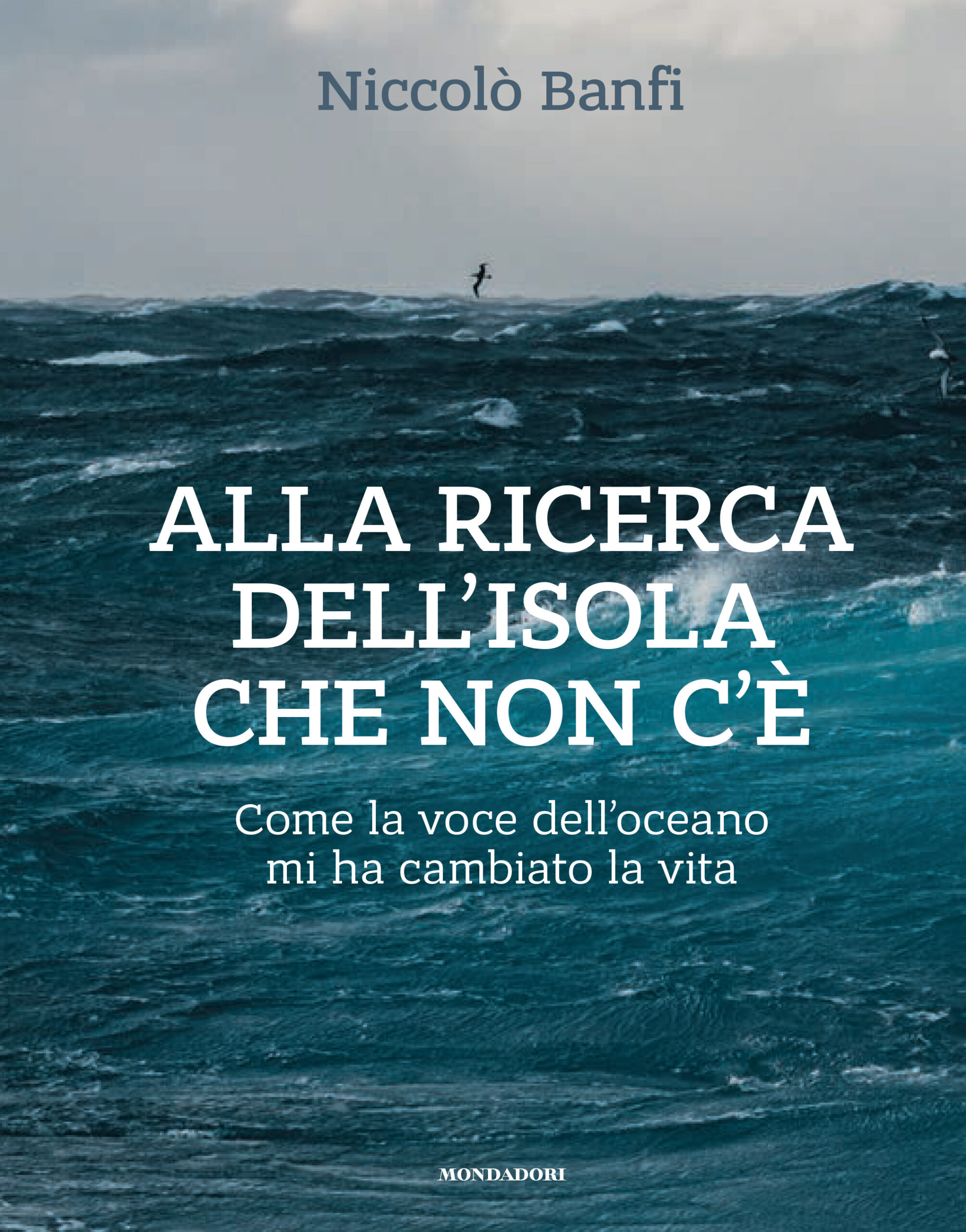
His book Alla Ricerca dell'Isola che non c'è was published by Mondadori in May 2025.
52 days crossing the South Atlantic. Through Antarctica, South Georgia, and the most isolated inhabited island on Earth.
6,500 miles following the ancient Polynesian route. Communities at the edge of climate collapse, still resisting.
From the Antarctic Peninsula to the High North aboard the NATO vessel Alliance — documenting the planet's two poles.
Built in Hamburg in 1911. One of the last working tall ships crossing the Southern Ocean.
↗A faithful replica of a 16th-century Spanish galleon. Built in Seville, sailing the world.

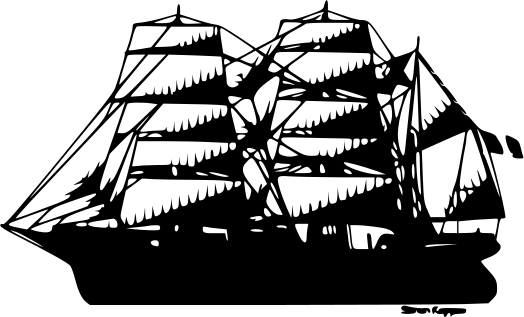
↗Built in 1896 in Nantes. The last three-masted barque of the French merchant navy still sailing.
↗The most advanced NATO oceanographic research ship. Arctic Mission 2026.

↗The Bark Europa was built in Hamburg in 1911 as a lightship. After decades of service, she was converted into an ocean-going sailing vessel in the 1990s and has since become one of the few tall ships in the world that regularly crosses the Southern Ocean.
She is a working ship in the truest sense. No engine is used when the wind allows. The crew of 16 manages her three masts in some of the most demanding conditions on Earth — the Drake Passage, the Roaring Forties, the waters around Antarctica. Niccolò sailed aboard her from Ushuaia to Cape Town in 2022.
El Galeón Andalucía is a working replica of a 16th-century Spanish galleon, built in Seville in 2009 by the Fundación Nao Victoria. She is one of the most faithful reproductions of the ships that once connected Europe to the Americas, crossing oceans that no one had crossed before.
Sailing aboard her is a physical encounter with history. The rigging, the hull, the movement through the water — everything speaks of a different relationship between humans and the ocean. A relationship of much greater vulnerability, and much greater attention.
The Belem was built in Nantes in 1896 for the sugar trade between France and the Caribbean. She is the oldest French sailing ship still in operation and one of only three barques of this era still afloat in the world.
In 2024, the Belem carried the Olympic flame from Greece to Marseille for the Paris Olympics — one of the most watched moments in the history of French maritime heritage. Navigating aboard her is navigating inside a living piece of history.
The NATO Research Vessel Alliance is operated by the Centre for Maritime Research and Experimentation (CMRE) in La Spezia, Italy. She is one of the most advanced oceanographic research platforms in the world, equipped to conduct scientific work in the most extreme maritime conditions.
For the Arctic Mission 2026, conducted in collaboration with the Marina Militare Italiana, the Alliance will document climate change at the High North. Melting ice, changing ocean temperatures, ecosystem shifts. The data collected will feed into NATO's scientific research on climate security.
An active volcano you can sail inside.
Rapa Nui. 900 Moai. One of the most remote inhabited islands in the Pacific.
Where Shackleton's crew survived for 137 days.
UNESCO Biosphere Reserve. One of the largest atolls in French Polynesia.
The pearl of the Gambier Archipelago.
The Atoll of Pearls. Barely two metres above sea level.
A volcanic island home to 100,000 Adélie penguins.
50 people. The smallest national jurisdiction in the world.
77 people. Twin atoll to Manihiki.
One of the great wildlife sanctuaries of the Southern Ocean.
The smallest inhabited island of the Marquesas.
The most isolated inhabited island on Earth.
Millions of penguins, elephant seals, albatrosses. South Georgia is wild in a way that is hard to describe. It is also where Shackleton is buried.
The glaciers are retreating. In photographs from fifty years ago, ice reaches the water. The change is visible within a human lifetime.
In 1916, Shackleton left 22 men here while he sailed to South Georgia for rescue. They survived under two upturned boats for 137 days.
The island is barely accessible even today. Steep cliffs, ice, and relentless weather.
Paulet Island hosts one of the largest Adélie penguin colonies in Antarctica — around 100,000 birds.
The island also bears traces of the 1902 Swedish Antarctic Expedition. A stone hut still stands.
Deception Island is the flooded caldera of an active volcano. Ships enter through Neptune's Bellows into a harbour ringed by black volcanic sand.
Abandoned whaling stations rust on the beach. Geothermal heat makes the water warm enough to swim in certain spots.
There is no airport. Ships come only a few times a year. The 251 people who live there have chosen to stay.
The island rises sharply from the ocean. Its isolation is not romantic. It is real.
The Moai watch over an island that has already lived through one collapse. Plastic from across the Pacific accumulates on its shores.
The Rapa Nui people are fighting to protect their culture and their land. The island is small. The problems are large.
Settled by the Bounty mutineers in 1790. At 50 people, it is the smallest permanent community on Earth.
Supply boats come four times a year. What happens when the last person leaves?
Mangareva is the main island of the Gambier Archipelago, enclosed in a vast turquoise lagoon. Pearl farming sustains the economy.
Rising sea levels are not an abstraction here. They are a conversation at the dinner table, at the harbour, at school.
Tahuata is the smallest inhabited island of the Marquesas. Its valleys shelter communities that have maintained traditional Marquesan culture.
The first recorded European contact with the Marquesas happened here in 1595.
Manihiki is a low coral atoll rising barely two metres above sea level. Its lagoon is famous for black pearls.
Climate change here is not a future scenario. It is the present. The island may become uninhabitable within decades.
Rakahanga and Manihiki are twin atolls 40 kilometres apart. Today Rakahanga has 77 permanent residents.
The atoll is so low that a single large storm could wash over it entirely. The community knows this. They stay anyway.
Fakarava is a UNESCO Biosphere Reserve. Its passes are among the most biodiverse marine environments in the Pacific.
Twice a year, thousands of sharks gather in the southern pass for the grouper spawning. The coral is bleaching.
"Exploring the unknown is an innate need of the human being."
Remoteness extends into two distinct entities, each with its own mission and identity.
A journey across the South Atlantic in search of the world's most remote islands. A book about distance, belonging, and the moment you realize that getting lost was the point.
Find the book ↗/ Work Together